
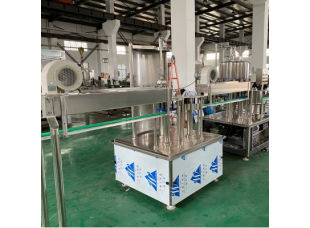
When change the bottles, only need to change the star wheel and guide plate, no other machine accessory need to change; this machine is suitable for rinsing PET bottles and glass bottle, can be used for large and middle-size enterprise, not only for the whole filling line, but also for the separate working;
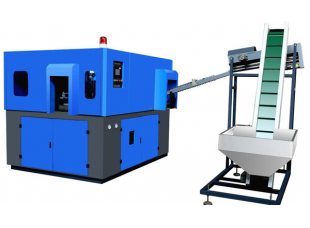
4000-5000BPH Full Auto PET Bottle Blowing Machine is the most stable two-step automatic stretch blow moulding machine.It has two cavities to six cavities and the maximum volume of the products is 2000ml.
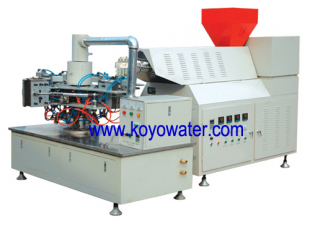
Ice tube making machine,milk bottle blowing machine
 NO.245 ZiYun road,HeFei city AnHui China
 +86-15156993135
 +86(0551)-65692199
 koyowater@gmail.com
 +86(0551)-65651988
In the modern beverage industry, efficiency, hygiene, and scalability are non-negotiable. Whether you are launching a local spring water brand or expanding a multinational operation, the backbone of your success lies in one critical investment: a complete bottled water production line.
Unlike assembling disparate machines from multiple vendors, an integrated production line offers a seamless, turnkey solution designed to transform raw water into a shelf-ready product with minimal human intervention and maximum quality control.
A truly complete line is more than just a filler and capper. It is an end-to-end system that typically encompasses three primary stages: water treatment, bottle manufacturing/filling, and packaging.
The journey begins long before the first bottle is filled. The treatment system is the most critical component for safety and taste. This stage includes:
Multi-media Filtration: Removes suspended solids, rust, and sediment.
Activated Carbon Filters: Eliminates chlorine, odors, and organic compounds.
Water Softening: Reduces calcium and magnesium to prevent scaling.
Reverse Osmosis (RO): The gold standard for removing dissolved minerals, bacteria, and viruses, producing purified water.
UV Sterilization & Ozonation: Final disinfection stages that ensure biological purity without chemical aftertaste.
For PET bottles, the line often integrates a blow molding machine. Preforms are heated and stretched within molds to form bottles just before filling. This "blow-fill" integration eliminates storage contamination and reduces logistics costs.
This is the heart of the line, typically housed in a Class 100 clean room environment.
Rotary Fillers: High-speed, volumetric filling that prevents foaming and overflow. Models vary for still water, carbonated water, or hot-filled products.
Capping Machines: From snap-on caps for sports bottles to screw caps for premium glass designs; these units ensure airtight seals using pick-and-place or spindle technologies.
Rinsing Integration: Most modern lines rinse bottles with sterilized air or water immediately before filling.
Unlabeled bottles are worthless. Complete lines include:
Hot Melt or Cold Glue Labelers: For paper labels.
Roll-Fed or Sleeve Labelers: For full-body shrink sleeves and tamper-evident bands.
Laser or Inkjet Coders: For printing batch numbers, expiration dates, and QR codes on the cap, neck, or body.
The final stage prepares your product for shipping:
Shrink Wrappers: Group bottles into packs (e.g., 6, 12, or 24-packs) using polyolefin film.
Tray Packers & Case Erectors: For cardboard cartons.
Robotic Palletizers: High-speed arms or gantry systems that stack finished cases onto pallets with precision patterns.
Stretch Wrappers: Secure the loaded pallet for transport.
Depending on your target market, complete lines are configured for specific bottle types:
| Bottle Type | Typical Material | Key Line Features |
|---|---|---|
| Still Water | PET (Plastic) | High-speed rotary filler, lightweight preforms, snap/sports caps. |
| Sparkling Water | PET or Glass | Counter-pressure fillers to retain CO2, reinforced bottle neck design. |
| Premium/Gourmet | Glass | Volumetric gravity fillers, cork/crown cappers, foil labelers. |
| Alkaline/Enhanced | PET or Aluminium | Acid-resistant fillers, specialized dosing units for additives (pH booster, electrolytes). |
Purchasing a complete line from a single manufacturer (e.g., Sidel, Krones, Tech-Long) offers distinct benefits over building your own:
Harmonized Speeds: No bottlenecks. The rinser matches the filler, which matches the labeller. Typical speeds range from 2,000 to 72,000 bottles per hour (BPH).
Centralized Control System: One HMI (Human-Machine Interface) monitors everything from water treatment to palletizing.
Simplified Validation: Single-point responsibility for FDA, CE, or ISO compliance saves months in regulatory approval.
Remote Diagnostics: Modern Industry 4.0 lines offer predictive maintenance alerts, reducing downtime.
Before purchasing a complete line, evaluate these factors:
Water Source: Is it municipal (requires RO), spring (minimal treatment), or artesian (consistently pure)?
Floor Space: A 36,000 BPH line can occupy over 300 square meters, excluding raw material storage.
Automation Level: Semi-automatic lines (budget-friendly,100k–100k–500k) versus fully automatic robotic lines (1M–1M–5M+).
Changeover Flexibility: If you run multiple bottle sizes, invest in quick-change format parts.
Modern complete lines are pivoting toward lightweighting (bottles with 30% less plastic), dry preform sterilizers (eliminating water rinse steps), and energy recovery systems. AI-powered vision inspection now rejects flawed bottles at 60,000 units per hour, ensuring zero-defect output.
A complete bottled water production line is not merely a collection of machinery—it is an integrated ecosystem. From the moment raw water enters the treatment tanks to the instant a pallet of perfectly labeled bottles rolls onto a truck, every component must work in symphony.
For entrepreneurs and established producers alike, investing in a turnkey line means investing in peace of mind, regulatory readiness, and the ability to scale from local hero to national brand.
Ready to take the plunge? Start by defining your required BPH, bottle material, and water type—then partner with a proven integrator to design your line.

ANHUI KOYO MACHINERY .CO.LTD.


Tel: +86(0551)-65692199
Fax: +86(0551)-65651988
Mobile(Whattsapp): +86-15156993135
Skype: koyopacker
Email: koyowater@gmail.com
Add: NO.245 ZiYun road,HeFei city AnHui China
Copyright © 2013 ANHUI KOYO MACHINERY .CO.LTD. All Rights Reserved.


 Current Location: